Table of Contents
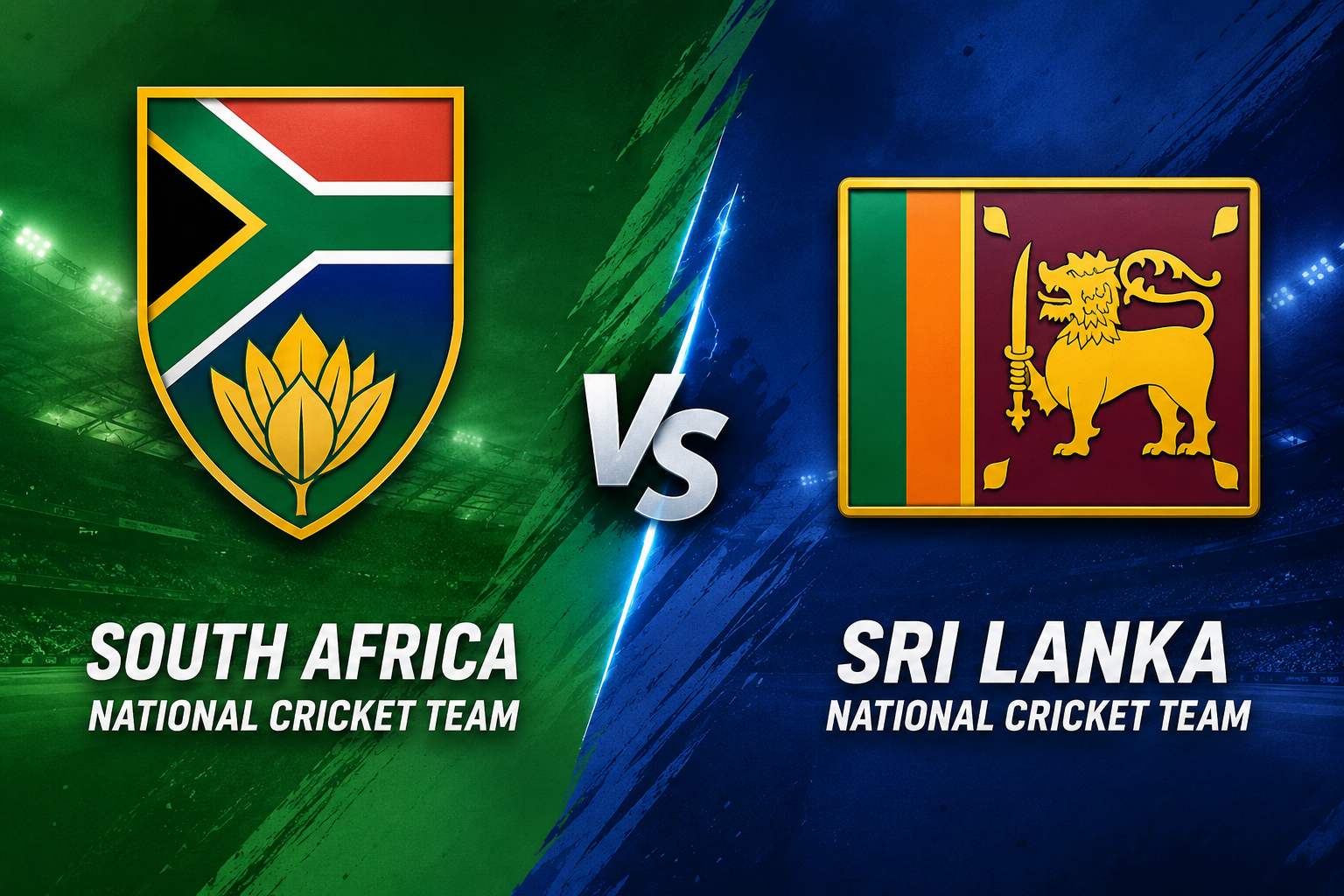
The cricket rivalry between South Africa and Sri Lanka has delivered some of the most memorable moments in international cricket. Over the years, both teams have produced thrilling contests across Test matches, One Day Internationals, and T20 Internationals. From dominant batting displays and devastating bowling spells to dramatic finishes and record-breaking performances, every encounter has added a new chapter to their competitive history. Fans have witnessed legendary players rise to the occasion under immense pressure, creating unforgettable memories. This rivalry is not defined only by results but also by tactical battles, individual brilliance, and the passion displayed on the field throughout decades of international competition.
Recent Matches Table
| Match Date | Venue | Match Format | Winner Team | Winning Margin | Top Scorer | Best Bowler |
| Dec 05, 2024 | Gqeberha | Test Match | South Africa | 109 runs | K. Verreynne (105) | K. Maharaj (5/76) |
| Nov 27, 2024 | Durban | Test Match | South Africa | 233 runs | T. Bavuma (70) | M. Jansen (7/13) |
| Jun 03, 2024 | New York | T20I (WC) | South Africa | 6 wickets | Q. de Kock (20) | A. Nortje (4/7) |
| Oct 07, 2023 | Delhi | ODI (WC) | South Africa | 102 runs | A. Markram (106) | G. Coetzee (3/68) |
| Sep 14, 2021 | Colombo | T20I Series | South Africa | 10 wickets | Q. de Kock (59) | B. Fortuin (2/21) |
| Sep 12, 2021 | Colombo | T20I Series | South Africa | 9 wickets | Q. de Kock (58) | T. Shamsi (3/20) |
Top Batting Performances of the Match
| Batter Name | Team Country | Innings Played | Runs Scored | Balls Faced | Fours Hit | Sixes Hit |
| Kyle Verreynne | South Africa | 1st Innings | 105 | 133 | 12 | 3 |
| Ryan Rickelton | South Africa | 1st Innings | 101 | 250 | 11 | 0 |
| Pathum Nissanka | Sri Lanka | 1st Innings | 89 | 157 | 11 | 1 |
| Temba Bavuma | South Africa | 1st Innings | 78 | 109 | 8 | 1 |
| Temba Bavuma | South Africa | 2nd Innings | 66 | 116 | 3 | 2 |
| Aiden Markram | South Africa | 2nd Innings | 55 | 75 | 5 | 0 |
Leading Bowlers and Key Wickets
| Bowler Name | Team Country | Overs Bowled | Maidens | Runs Given | Wickets Taken | Key Wicket Dismissed |
| Keshav Maharaj | South Africa | 25.0 | 3 | 76 | 5 | Kusal Mendis |
| Dane Paterson | South Africa | 22.0 | 4 | 71 | 5 | Pathum Nissanka |
| Lahiru Kumara | Sri Lanka | 17.4 | 3 | 79 | 4 | Ryan Rickelton |
| Asitha Fernando | Sri Lanka | 24.0 | 2 | 102 | 3 | Temba Bavuma |
| Vishwa Fernando | Sri Lanka | 22.0 | 6 | 65 | 2 | Marco Jansen |
| Kagiso Rabada | South Africa | 21.0 | 3 | 63 | 2 | D. de Silva |
Batting Records and Highest Run Scorers
| Position Rank | Player Name | Team Format | Total Match Runs | Strike Rate | Match Fours | Match Sixes |
| 1st | Temba Bavuma | Test Match | 144 | 64.00 | 11 | 3 |
| 2nd | Ryan Rickelton | Test Match | 125 | 42.37 | 14 | 0 |
| 3rd | Kyle Verreynne | Test Match | 114 | 71.25 | 13 | 3 |
| 4th | Pathum Nissanka | Test Match | 107 | 53.23 | 15 | 1 |
| 5th | Aiden Markram | Test Match | 75 | 68.18 | 9 | 0 |
| 6th | Dinesh Chandimal | Test Match | 73 | 47.40 | 10 | 0 |
Bowling Records and Best Performances
| Record Rank | Bowler Profile | Match Innings | Economy Rate | Dot Balls | Five-Wicket Haul | Match Utility Score |
| 1st | Dane Paterson | 1st Innings | 3.23 | 98 | Yes | 96.5 |
| 2nd | Keshav Maharaj | 2nd Innings | 3.04 | 112 | Yes | 94.0 |
| 3rd | Lahiru Kumara | 1st Innings | 4.47 | 72 | No | 85.0 |
| 4th | Asitha Fernando | 1st Innings | 4.25 | 96 | No | 78.5 |
| 5th | Vishwa Fernando | 1st Innings | 2.95 | 103 | No | 75.0 |
| 6th | Kagiso Rabada | 2nd Innings | 3.00 | 94 | No | 71.0 |
The Day Two Emerging Cricket Nations Crossed Paths
The rivalry began when two ambitious cricket nations started building their identities on the international stage. One side brought athletic fielding, disciplined fast bowling, and a professional approach, while the other relied on flair, creativity, and fearless batting. Their early meetings were not surrounded by intense hostility, but every contest revealed growing competitiveness. Players quickly realized that neither team was willing to surrender momentum easily. The matches became fascinating tactical battles where patience often clashed with aggression. Fans from both countries embraced the contest because it offered unpredictable cricket and memorable individual performances. As seasons passed, every encounter added another layer to the rivalry. What started as a regular fixture gradually transformed into a respected international contest filled with pressure situations, changing fortunes, and standout performances. The foundation built during these early years would eventually produce dramatic moments across formats and generations.
| Year | Format | Venue Type | Result Trend |
| Early Era | Test | Traditional Grounds | Competitive |
| Early Era | ODI | Neutral Venues | Balanced |
| Development Phase | Test | Home Conditions | Tactical |
| Development Phase | ODI | Away Conditions | Intense |
| Growth Period | Multi Format | International Stage | Rivalry Building |
First Sparks of the Rivalry
The first encounters established the tone for future battles. Both sides entered the field eager to prove their capabilities against quality opposition. Early matches featured disciplined bowling spells, cautious batting approaches, and crucial moments that often determined outcomes. Captains focused heavily on controlling momentum because even small mistakes could shift the balance. Several players used these contests to announce themselves on the international stage, producing valuable runs and decisive wickets. Media attention increased as supporters recognized the growing competitiveness between the teams. The rivalry was still developing, yet there was already evidence that future meetings would carry significant importance. Tactical decisions regarding batting order, bowling changes, and field placements frequently became talking points after matches. These opening chapters created the competitive spirit that would define the rivalry for decades.
| Match Phase | Key Factor | Impact | Outcome |
| Opening Overs | New Ball | Early Pressure | Advantage Shift |
| Middle Overs | Rotation | Stability | Recovery |
| Partnership Phase | Batting Depth | Momentum | Strong Position |
| Bowling Spell | Accuracy | Breakthroughs | Turning Point |
| Final Overs | Execution | Result Control | Match Decider |
South Africa’s Power Era Meets Sri Lanka’s Growing Confidence
As one side developed into a global powerhouse and the other evolved into an increasingly dangerous opponent, the rivalry entered a fascinating phase. Fast bowlers challenged aggressive batters, while experienced captains searched for tactical advantages. Confidence grew with every series, and close contests became common. Teams arrived with stronger squads, greater expectations, and improved strategies. Matches often featured high-quality fielding and disciplined execution under pressure. Spectators witnessed emerging stars competing against established names, creating compelling narratives. Momentum frequently shifted across sessions, making outcomes difficult to predict. The rivalry became respected worldwide because both teams consistently produced entertaining cricket. This period helped transform the contest from a developing rivalry into a significant international fixture that attracted attention whenever schedules were announced.
| Era | Team Strength | Playing Style | Match Character |
| Expansion | Balanced Squad | Structured | Competitive |
| Peak Growth | Experienced Core | Aggressive | High Intensity |
| Transition | Emerging Talent | Flexible | Unpredictable |
| Established Phase | Complete Team | Balanced | Quality Cricket |
| Mature Rivalry | Deep Resources | Tactical | Memorable |
The 1996 World Cup Revolution
The mid-1990s changed the landscape of international cricket. Innovative tactics, fearless batting, and aggressive intent challenged traditional thinking. This period influenced future encounters by encouraging a more attacking mindset. Teams became willing to take risks during powerplay periods and pursue ambitious targets. Strategic planning evolved rapidly as coaches and captains searched for new methods to gain advantages. Players demonstrated that innovation could be just as valuable as experience. Supporters embraced this transformation because matches became faster, more entertaining, and less predictable. The rivalry benefited significantly from these developments, producing contests filled with momentum swings and tactical surprises. Cricket entered a new era, and both sides adapted quickly to remain competitive at the highest level.
| Tactical Change | Purpose | Effect | Long Term Value |
| Aggressive Starts | Fast Scoring | Pressure | Innovation |
| Flexible Batting | Adaptability | Stability | Success |
| Attacking Fields | Wickets | Momentum | Control |
| Bowling Variations | Containment | Balance | Consistency |
| Strategic Planning | Matchups | Advantage | Growth |
When World Cup Pressure Changed Everything
Tournament cricket introduced a completely different level of intensity. Every decision carried greater consequences, and players faced enormous expectations from supporters. Pressure influenced tactics, shot selection, and bowling plans. Some athletes elevated their performances, while others struggled under the spotlight. Captains often relied on experience when navigating critical moments. Close finishes generated unforgettable memories and strengthened the emotional connection between fans and teams. These matches were rarely ordinary because the stakes transformed every run and wicket into a major event. Tournament encounters added prestige to the rivalry and ensured that future meetings would be viewed through the lens of previous dramatic battles.
| Tournament Stage | Pressure Level | Key Focus | Result Impact |
| Group Match | Moderate | Momentum | Qualification |
| Crucial Fixture | High | Consistency | Advantage |
| Knockout Stage | Very High | Execution | Survival |
| Semi Final Race | Extreme | Composure | Progress |
| Major Clash | Maximum | Performance | Legacy |
The Era of Pollock, Kallis and Jayasuriya
This period featured some of the finest cricketers of their generation. World-class all-round ability, explosive batting, and intelligent leadership elevated the quality of competition. Individual battles became major attractions because elite players consistently influenced results. Spectators eagerly followed contests involving established stars who possessed the ability to change matches within a few overs. Tactical preparation became increasingly important as teams searched for ways to neutralize key performers. Partnerships, bowling spells, and fielding brilliance regularly determined outcomes. The rivalry reached new heights because both teams possessed match winners capable of delivering extraordinary performances under pressure.
| Player Type | Strength | Match Influence | Legacy |
| Opener | Fast Starts | Momentum | Impactful |
| All Rounder | Balance | Stability | Valuable |
| Middle Order | Consistency | Recovery | Reliable |
| Fast Bowler | Pace | Breakthroughs | Dominant |
| Spinner | Control | Pressure Building | Strategic |
Muralitharan Versus South Africa’s Batting Machine
One of the most fascinating chapters involved the battle between elite spin bowling and a powerful batting lineup. Every encounter carried strategic importance because success often depended on which side adapted more effectively. Batters attempted to disrupt rhythm through footwork and rotation, while the spinner relied on variation, accuracy, and patience. These contests became defining moments within matches and frequently influenced final results. Supporters closely followed every duel because a single breakthrough could transform the direction of the game. The tactical complexity of these battles showcased the highest level of cricketing skill. This chapter remains one of the most respected periods in the rivalry’s history due to the quality of competition and the remarkable performances produced under intense scrutiny.
| Battle Element | Batting Response | Bowling Strategy | Outcome Potential |
| Early Spell | Caution | Accuracy | Balance |
| Middle Session | Rotation | Variation | Pressure |
| Attacking Phase | Aggression | Control | Turning Point |
| Long Partnership | Patience | Persistence | Advantage |
| Final Session | Risk Taking | Breakthrough Hunt | Match Defining |
Conclusion
The rivalry between South Africa and Sri Lanka remains one of cricket’s most respected and entertaining contests. Across different generations, both teams have showcased exceptional talent, resilience, and determination. Their encounters have featured iconic performances, historic victories, and unforgettable turning points that continue to be discussed by cricket fans worldwide. Whether in Tests, ODIs, or T20Is, each match has contributed to a rich cricketing legacy built on competition and mutual respect. As new players continue to emerge, the rivalry is set to create even more memorable moments, ensuring that future clashes remain as exciting and significant as those from the past.
FAQs
Who has won more matches between South Africa and Sri Lanka?
South Africa has generally maintained a stronger overall record across international formats, although Sri Lanka has achieved several memorable victories in major tournaments and bilateral series.
Which format has produced the most competitive contests?
One Day Internationals have often delivered the closest and most dramatic matches, featuring thrilling run chases, narrow victories, and standout individual performances.
Who are the most successful players in this rivalry?
Several legendary cricketers have left their mark, including Jacques Kallis, AB de Villiers, Hashim Amla, Kumar Sangakkara, Sanath Jayasuriya, and Muttiah Muralitharan.
What is the biggest strength of South Africa in this rivalry?
South Africa’s traditional strengths have been pace bowling, athletic fielding, and a strong middle order capable of performing under pressure.
Why is this rivalry important in international cricket?
The rivalry is significant because it has consistently produced high-quality cricket, memorable scorecards, world-class individual performances, and dramatic moments across all formats.