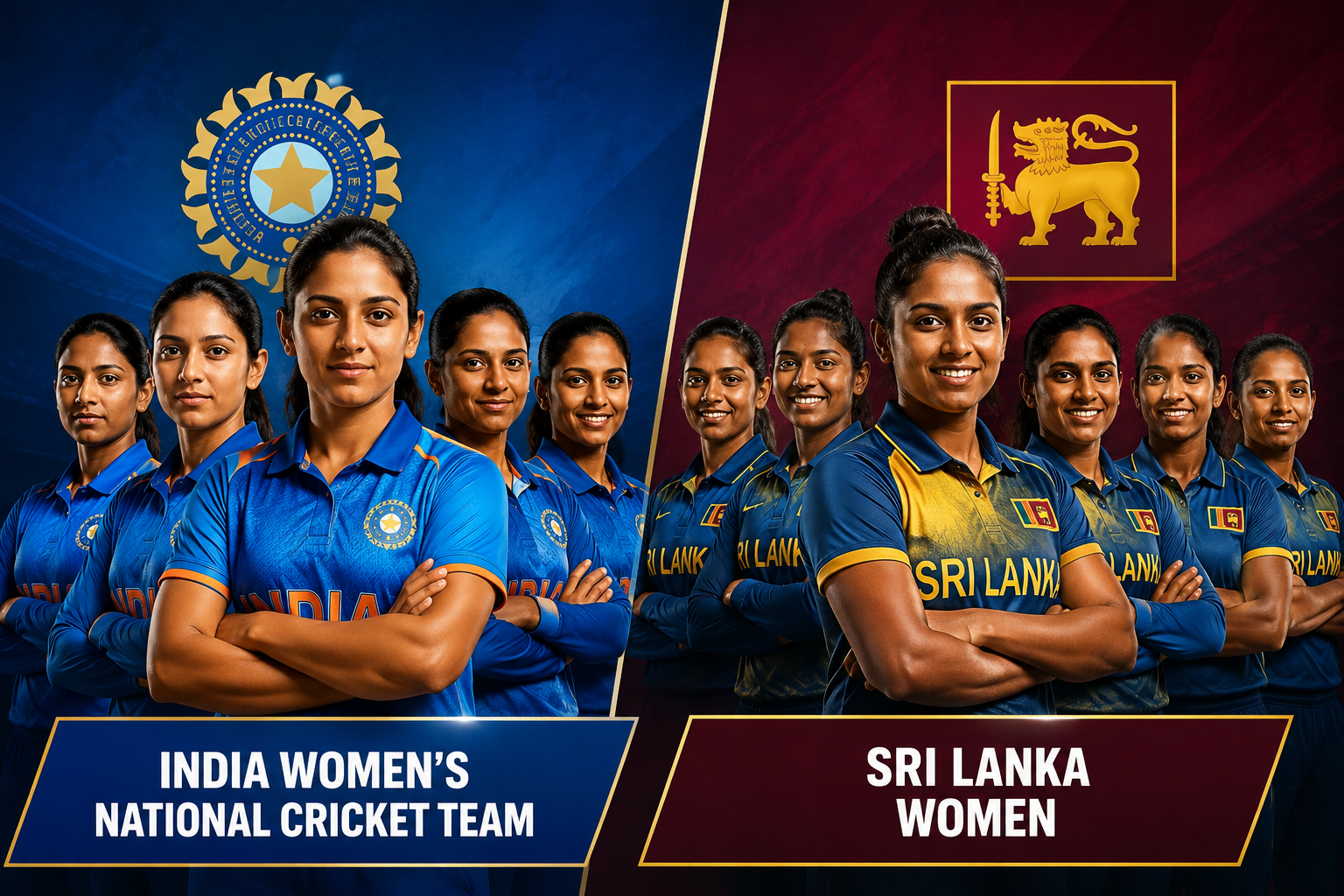
The rivalry between India Women and Sri Lanka Women has become one of the most recognizable contests in Asian women’s cricket. Over the years, both teams have produced memorable performances, thrilling finishes, and impressive individual achievements that have shaped the history of the game. While India has traditionally enjoyed greater success, Sri Lanka has consistently challenged its regional neighbor with determination and improving standards. From early encounters to modern tournament clashes, every match has contributed to a fascinating cricket story. The statistics, scorecards, records, and key moments from these contests highlight the growth of women’s cricket across South Asia and beyond today.
Recent Matches Table
Date
Format
Venue
Winner
Margin
Top Batter
Top Bowler
Dec 30 2025
T20I
Thiruvananthapuram
India
15 runs
S Mandhana
D Sharma
Dec 28 2025
T20I
Thiruvananthapuram
India
30 runs
S Mandhana
V Sharma
Dec 26 2025
T20I
Thiruvananthapuram
India
8 wickets
S Verma
D Sharma
Dec 23 2025
T20I
Visakhapatnam
India
7 wickets
H Kaur
R Singh
Dec 21 2025
T20I
Visakhapatnam
India
8 wickets
S Mandhana
R Singh
Oct 09 2024
T20I
Dubai
India
82 runs
H Kaur
A Reddy
Top Batting Performances of the Match Table
Batter
Team
Runs
Balls
4s
6s
Strike Rate
Smriti Mandhana
India
80
48
9
2
166.66
Shafali Verma
India
79
50
8
1
158.00
Chamari Athapaththu
Sri Lanka
80
48
14
1
166.66
Harmanpreet Kaur
India
52
27
8
1
192.59
Hasini Perera
Sri Lanka
43
39
4
0
110.25
Jemimah Rodrigues
India
36
22
5
0
163.63
Leading Bowlers and Key Wickets Table
Bowler
Team
Overs
Wickets
Runs
Economy
Key Wicket
Deepti Sharma
India
4.0
3
18
4.50
C Athapaththu
Renuka Singh Thakur
India
4.0
2
16
4.00
V Gunarathne
Kavisha Dilhari
Sri Lanka
4.0
2
22
5.50
Shafali Verma
Arundhati Reddy
India
4.0
3
19
4.75
N de Silva
Sugandika Kumari
Sri Lanka
3.0
2
14
4.66
S Mandhana
Asha Sobhana
India
4.0
1
21
5.25
A Sanjeewani
Batting Records and Highest Run Scorers Table
Player
Format
Matches
Runs
Average
Strike Rate
High Score
Smriti Mandhana
WODIs
12
520
41.46
84.50
102
Chamari Athapaththu
WODIs
14
420
26.68
72.10
115
Harmanpreet Kaur
WODIs
15
385
28.00
75.40
94
Shafali Verma
WT20Is
10
320
35.55
130.20
79
Hasini Perera
WT20Is
12
210
19.09
98.40
43
Mithali Raj
WODIs
10
315
45.00
68.90
73
Bowling Records and Best Performances Table
Bowler
Format
Matches
Wickets
Best Bowling
Average
Economy
Deepti Sharma
WT20Is
14
22
4/10
14.20
5.40
Inoka Ranaweera
WT20Is
12
15
3/21
18.50
6.20
Renuka Singh Thakur
WT20Is
8
12
3/16
15.10
5.10
Rajeshwari Gayakwad
WODIs
9
16
4/28
16.80
3.90
Oshadi Ranasinghe
WT20Is
10
11
3/22
21.40
6.80
Jhulan Goswami
WODIs
12
18
4/31
17.20
3.50
When the Rivalry First Began
Early meetings between the two South Asian teams created the foundation for a long and competitive rivalry. India entered those contests with greater experience, stronger domestic structures, and a more settled core of players, while Sri Lanka approached the matches with determination and a growing belief that it could challenge stronger opposition. The first encounters were often one sided, yet they revealed important signs of progress in Sri Lankan cricket. Young batters learned to handle quality spin, bowlers discovered how to build pressure through disciplined lines, and fielders began matching the intensity of their opponents. Fans from both countries followed every result closely because women’s cricket in the region was still developing and every international contest carried significance. Those early scorecards now represent the beginning of a rivalry that would later produce memorable tournaments, dramatic finishes, and several record breaking performances. The opening chapter of this story is less about dominance and more about two neighboring cricket cultures finding their identity on the international stage.
1990s
Early meetings
India led
Regional interest grew
1990s
First bilateral contests
India won most games
Experience advantage
1990s
Learning phase
Sri Lanka improved steadily
Competitive spirit increased
1990s
Growing fan support
Women’s cricket expanded
Rivalry took shape
1990s
Foundation years
Regular meetings
Future rivalry created
Building a Competitive Edge
As women’s cricket expanded across Asia, Sri Lanka began closing the gap through better coaching, improved fitness standards, and a wider talent pool. India still enjoyed greater depth, but matches gradually became more competitive and tactical. Batters focused on rotating strike rather than only attacking, while bowlers relied on slower balls and tight field placements to restrict scoring. Bilateral series during this period helped both teams understand each other’s strengths and weaknesses. India often depended on experienced middle order players and spin attacks, whereas Sri Lanka looked for breakthroughs through disciplined bowling and energetic fielding. Statistical trends from these years showed India winning more frequently, yet the margins were not always large. Several games were decided in the final overs, which increased fan interest and added emotional intensity to the rivalry. This stage marked the transition from predictable results to genuinely contested cricket, laying the groundwork for future high pressure encounters in major tournaments.
2000s
Better coaching
Sri Lanka improved
Closer contests
2000s
Fitness focus
Stronger fielding
Higher intensity
2000s
Bilateral series
Regular competition
Tactical growth
2000s
Spin battles
Middle order role
Balanced matches
2000s
Competitive era
Smaller margins
Rivalry strengthened
Asia Cup Battles That Raised the Stakes
The rivalry gained a sharper edge when the teams met regularly in the Women’s Asia Cup. Tournament cricket brought pressure that bilateral series could not match. Every run mattered, every dropped catch became costly, and every tactical decision was examined by supporters and analysts. India often entered these matches as favorites, but Sri Lanka repeatedly produced spirited performances that tested that reputation. Slow pitches, turning conditions, and tense chases created contests where momentum shifted quickly. Some matches were controlled by experienced Indian batters, while others were shaped by Sri Lankan bowlers who kept the scoring rate in check. Fans remember these encounters because they carried the weight of regional pride and tournament qualification. The Asia Cup transformed the rivalry from a routine fixture into a high stakes battle where confidence, composure, and execution under pressure mattered as much as talent. Several memorable scorecards from this competition remain central to the history shared by the two teams.
Asia Cup
High pressure
Regional pride
Intense contests
Asia Cup
Turning pitches
Spin dominated
Low scoring games
Asia Cup
Close chases
Late drama
Excited crowds
Asia Cup
India favored
Sri Lanka challenged
Competitive spirit
Asia Cup
Memorable scorecards
Key victories
Rivalry intensified
Captains Who Defined an Era
Leadership played a major role in shaping the rivalry. Indian captains often focused on controlling the game through disciplined bowling changes, attacking fields for spinners, and steady batting partnerships. Sri Lankan leaders, meanwhile, looked for moments of surprise through aggressive field placements, bowling variations, and quick tactical adjustments. The captaincy battle frequently influenced the outcome more than individual brilliance. A well timed bowling change could break a partnership, while a calm chase under pressure could shift momentum for an entire series. Captains also carried the expectations of their supporters, making every decision highly visible. Statistical records from different eras show how leadership styles evolved as women’s cricket became faster, more professional, and more competitive. The rivalry was not only a contest between batters and bowlers; it was also a contest between strategic minds trying to outthink each other in difficult conditions.
Leadership
Tactical planning
Bowling changes
Field control
India
Spin strategy
Steady batting
Controlled chases
Sri Lanka
Aggressive fields
Bowling variations
Quick adjustments
Pressure games
Calm decisions
Momentum shifts
Series impact
Captaincy
Strategic battle
Team confidence
Rivalry shaped
Batting Stars Who Owned the Rivalry
Many of the rivalry’s most memorable moments came from outstanding batting performances. Indian batters frequently built large partnerships that set up commanding totals, while Sri Lankan stars produced courageous innings that kept their team competitive even in difficult situations. Centuries, fighting fifties, and pressure chases became defining features of several encounters. Some players dominated spin bowling with smart footwork, while others excelled through timing and placement rather than power. The best innings often came when the team was under pressure and needed composure. Statistical records highlight repeat performers who consistently scored runs across different formats and tournaments. These batting stars became familiar names for fans on both sides and helped turn ordinary matches into memorable sporting events. Their performances also influenced team strategies, forcing captains to adjust bowling plans and field settings whenever they walked to the crease.
Batting
Centuries
Fifties
Big partnerships
India
Top order runs
Strong chases
Match control
Sri Lanka
Fighting innings
Pressure runs
Competitive totals
Records
Consistent scorers
Milestone knocks
Fan favorites
Impact
Changed tactics
Forced adjustments
Memorable contests
Bowling Performances That Turned Games Around
While batting performances often received the headlines, bowling frequently decided the biggest matches. Indian spinners regularly exploited turning pitches and built pressure through accuracy and patience. Sri Lankan bowlers responded with clever variations, slower deliveries, and disciplined lines that made scoring difficult. Several famous contests were transformed by one decisive spell that broke a partnership or triggered a collapse. The rivalry produced notable bowling figures in both ODIs and T20Is, with bowlers learning how to adapt to different conditions and opposition lineups. Tactical planning became increasingly important as teams analyzed weaknesses and targeted specific batters. A successful bowling performance could change not only a match result but also the confidence of an entire squad. Many supporters still remember the spells that silenced crowds, shifted momentum, and proved that a well executed bowling strategy can be as influential as a brilliant century.
Bowling
Spin control
Pressure overs
Wicket bursts
India
Turning pitches
Accurate lines
Partnership breaks
Sri Lanka
Slower balls
Disciplined bowling
Scoring restricted
Tactics
Target batters
Field plans
Match control
Memories
Famous spells
Momentum shifts
Rivalry highlights
Matches That Changed the Narrative
Every long rivalry has moments that alter the story, and this contest has produced several such turning points. There were matches where Sri Lanka unexpectedly challenged the stronger side, contests that went deep into the final overs, and victories that changed the confidence of players and supporters alike. These games mattered because they showed that past records did not guarantee future results. A brilliant partnership, a dramatic collapse, or a single tactical gamble could reshape the narrative overnight. Fans remember the tension, the noise in the stadium, and the emotional swings that accompanied those encounters. The rivalry became richer because of these unpredictable moments. Instead of being defined only by statistics, it came to be defined by resilience, pressure handling, and the ability to respond when expectations were highest. Those changing narratives continue to keep every new meeting between the two teams intriguing and closely watched.
Turning point
Unexpected challenge
Close finish
Confidence shift
Drama
Final overs
Big partnerships
Pressure moments
Fans
Emotional swings
Loud support
Memorable nights
Teams
Resilience shown
Recovery efforts
Belief increased
Legacy
Rivalry deepened
Stories created
Future contests awaited
Conclusion
The history of meetings between these two teams reflects the development of women’s cricket in South Asia. Their contests have featured outstanding batting displays, match-winning bowling spells, strategic captaincy decisions, and unforgettable pressure moments. While results have often favored India, Sri Lanka’s progress has made the rivalry increasingly competitive and exciting. Each encounter has added new records, memorable scorecards, and valuable lessons for both sides. As women’s cricket continues to grow in popularity and professionalism, future clashes are expected to produce even more remarkable performances. This rivalry remains an important chapter in the ongoing evolution of international women’s cricket today.
Faq?
Which team has won more matches in this rivalry? India Women have historically won more matches across ODIs, T20Is, and major tournaments.
What is the most important tournament where these teams frequently meet? The Women’s Asia Cup has been one of the most significant tournaments featuring regular encounters between the two sides.
Which format has produced the most memorable contests? T20 Internationals have often delivered exciting finishes and closely fought matches due to the shorter format.
Why is this rivalry important in Asian cricket? It showcases the growth of women’s cricket in South Asia and provides competitive regional contests that help both teams develop.
What makes these matches interesting for fans? Strong individual performances, tactical battles, historical records, and unpredictable moments make the rivalry entertaining for cricket followers.