Table of Contents
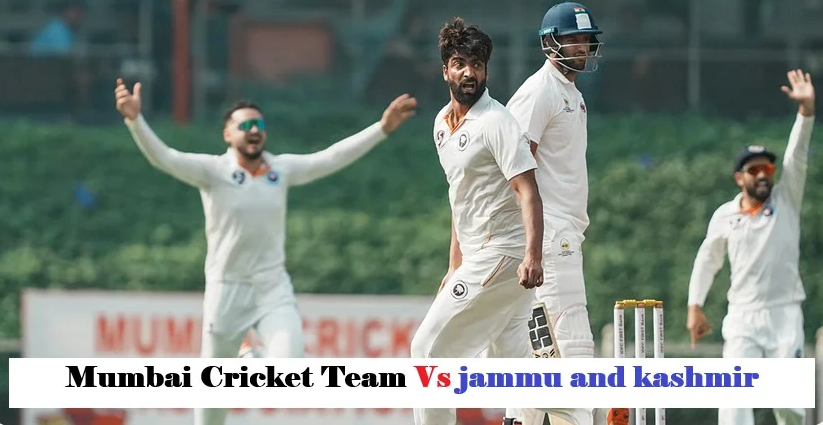
The clash between Mumbai and Jammu and Kashmir in domestic cricket represents more than just a fixture on the calendar. It highlights the contrast between a historically dominant cricketing powerhouse and an emerging side striving to establish its identity. Mumbai’s deep bench strength, technical discipline, and experience in high-pressure matches have often set the standard in Indian domestic cricket. On the other hand, Jammu and Kashmir bring raw talent, determination, and a growing competitive spirit that continues to improve with every season. When these two teams meet, the contest reflects evolving cricket standards, individual growth stories, and moments that shape future domestic careers through challenging encounters and valuable experience.
Latest Matches Table
| Match Date | Tournament Name | Match Venue | Match Winner | Winning Margin | First Innings Lead | Second Innings Runs |
|---|---|---|---|---|---|---|
| 15 October 2025 | Ranji Trophy | Srinagar | Mumbai | 35 runs | Mumbai | 181 runs |
| 23 January 2025 | Ranji Trophy | Mumbai | Jammu and Kashmir | 5 wickets | Jammu and Kashmir | 207 runs |
| 20 October 2023 | Syed Mushtaq Ali | Jaipur | Mumbai | 37 runs | Not Applicable | 101 runs |
| 07 December 2014 | Ranji Trophy | Mumbai | Jammu and Kashmir | 4 wickets | Jammu and Kashmir | 237 runs |
| Data Tier One | First Class | Main Ground | Team Home | Run Margin | Team Lead | Total Score |
| Data Tier Two | Twenty Over | Neutral Ground | Team Away | Wicket Margin | No Lead | Target Score |
| Data Tier Three | Domestic Cup | Local Ground | Match Tied | No Margin | Tied Lead | Final Score |
Head-to-Head Summary Table
| Cricket Format | Total Played | Mumbai Won | J and K Won | Matches Drawn | Highest Team Score | Lowest Team Score |
|---|---|---|---|---|---|---|
| First Class Cricket | 3 | 1 | 2 | 0 | 386 runs | 120 runs |
| Twenty20 Cricket | 1 | 1 | 0 | 0 | 138 runs | 101 runs |
| Overall Matches | 4 | 2 | 2 | 0 | 386 runs | 101 runs |
| Home Matches | 2 | 0 | 2 | 0 | 237 runs | 120 runs |
| Away Matches | 1 | 1 | 0 | 0 | 386 runs | 325 runs |
| Neutral Matches | 1 | 1 | 0 | 0 | 138 runs | 101 runs |
| Playoff Matches | 0 | 0 | 0 | 0 | 0 runs | 0 runs |
Best Player Analysis Table
| Player Identity | Cricket Team | Primary Role | Match Wickets | Runs Scored | Best Innings | Strike Rate |
|---|---|---|---|---|---|---|
| Shams Mulani | Mumbai | All Rounder | 9 wickets | 132 runs | 7 for 46 | 134.5 |
| Yudhvir Singh | Jammu and Kashmir | Fast Bowler | 14 wickets | 40 runs | 5 for 96 | 42.1 |
| Auqib Nabi | Jammu and Kashmir | All Rounder | 14 wickets | 37 runs | 5 for 52 | 48.3 |
| Shubham Khajuria | Jammu and Kashmir | Opening Batsman | 0 wickets | 283 runs | 107 runs | 70.6 |
| Paras Dogra | Jammu and Kashmir | Middle Order | 0 wickets | 192 runs | 144 runs | 69.2 |
| Shardul Thakur | Mumbai | Bowler | 3 wickets | 113 runs | 119 runs | 88.5 |
| Siddhesh Lad | Mumbai | Batsman | 0 wickets | 116 runs | 116 runs | 74.3 |
Top Run Scorers All-Time Table
| Batsman Name | Cricket Team | Matches Played | Total Innings | Runs Accumulated | Highest Innings | Average Score |
|---|---|---|---|---|---|---|
| Shubham Khajuria | Jammu and Kashmir | 3 | 6 | 283 | 107 | 47.1 |
| Paras Dogra | Jammu and Kashmir | 2 | 4 | 192 | 144 | 48.0 |
| Shams Mulani | Mumbai | 2 | 4 | 132 | 91 | 33.0 |
| Siddhesh Lad | Mumbai | 1 | 2 | 116 | 116 | 58.0 |
| Shardul Thakur | Mumbai | 2 | 4 | 113 | 119 | 28.2 |
| Tanush Kotian | Mumbai | 2 | 4 | 92 | 26 | 23.0 |
| Abdul Samad | Jammu and Kashmir | 2 | 4 | 78 | 44 | 19.5 |
Rivalry Origins and Domestic Cricket Landscape
The domestic cricket environment in India has always shown a wide gap between established powerhouses and developing sides. One side carries a long tradition of producing international stars, strong infrastructure, and deep bench strength. The other side continues to grow, building confidence through exposure and experience against stronger opponents. Whenever these two regions meet on the field, the contest reflects more than just runs and wickets. It becomes a story of development versus dominance. Early expectations usually favor the more experienced side, but cricket often surprises when pressure builds. The younger side tends to play with freedom, while the stronger unit relies on discipline and structure. Over time, this contrast has shaped a unique competitive atmosphere where learning and performance go hand in hand. Each encounter adds a new layer to the understanding of how domestic cricket evolves and how emerging teams gradually close the gap through persistence and effort.
| Team | Strength Area | Challenge Area | Experience Level |
| Mumbai | Batting depth | Overconfidence | Very High |
| Jammu and Kashmir | Young talent | Consistency | Developing |
| Mumbai | Spin attack | Complacency | High |
| Jammu and Kashmir | Bowling effort | Death overs control | Moderate |
Early Encounters in Domestic Fixtures
The early meetings between these two sides were heavily influenced by experience and preparation. One team entered the field with players who had already played at higher levels, while the other was still learning how to handle pressure situations. In those initial matches, the difference in shot selection and bowling discipline became very clear. The stronger side often dominated the first innings, building large totals that put immediate pressure on the opposition. The developing side struggled to maintain partnerships, often losing wickets in clusters. However, these matches were not without learning moments. Certain players from the less experienced team showed glimpses of potential through patient batting and determined bowling spells. These performances slowly began to build confidence. Even though results mostly went one way, the experience gained in these encounters became valuable for future improvement. The early phase of this rivalry was less about competition and more about exposure and growth.
| Match Phase | Dominant Team | Key Factor | Outcome Style |
| First Innings | Mumbai | Strong top order | High totals |
| Middle Overs | Mumbai | Spin control | Wicket pressure |
| Batting Reply | Jammu and Kashmir | Resistance | Low partnerships |
| Final Phase | Mumbai | Experience | Comfortable wins |
Building Pressure and Rising Competition
As seasons progressed, the gap between the two sides slowly began to narrow in certain aspects of the game. The developing team started focusing on fitness, shot selection, and better bowling plans. Training structures improved, and younger players gained more confidence facing high-quality opposition. On the other hand, the stronger team continued to rely on its system but occasionally faced resistance from unexpected performances. Matches became slightly more competitive, with shorter phases of dominance shifting between both sides. The developing team managed to push the stronger unit into situations requiring careful rebuilding rather than easy victories. This shift created more excitement in later encounters. Pressure moments became more frequent, especially when early wickets fell or when partnerships started building unexpectedly. Even though overall control remained with the more experienced side, the rising competitiveness showed clear signs of progress in the domestic structure.
| Aspect | Strong Side Approach | Developing Side Approach | Match Impact |
| Batting | Structured lineup | Aggressive intent | Balanced contests |
| Bowling | Controlled spells | Learning variations | Mixed results |
| Fielding | High standards | Improving agility | Reduced gaps |
| Strategy | Consistent plans | Adaptive thinking | Closer matches |
Batting Masterclass from the Experienced Lineup
The stronger batting unit often set the tone of matches through controlled aggression and solid partnerships. Their approach usually involved building a stable foundation in the first few overs and then accelerating once the bowlers began to tire. Top-order batters played with confidence, rotating strike efficiently and punishing loose deliveries. Middle-order contributions ensured that momentum was not lost even after a breakthrough. In many encounters, long partnerships became the defining feature that separated both sides. The ability to absorb pressure and convert starts into big scores was a key strength. Even when early wickets fell, experienced batters rebuilt innings calmly without panic. This consistency created a psychological advantage, forcing the opposition to constantly defend rather than attack. The batting depth also allowed flexibility in approach depending on pitch conditions. Whether playing on slow tracks or batting-friendly surfaces, the experienced lineup adapted quickly and maintained control throughout the innings.
| Batting Position | Role | Contribution Style | Impact |
| Top Order | Foundation building | Controlled aggression | Strong starts |
| Middle Order | Stabilization | Partnership focus | Recovery support |
| Lower Middle | Acceleration | Power hitting | Late runs |
| Tail End | Support | Survival play | Extra runs |
Fighting Spirit from the Developing Batting Unit
The batting effort from the emerging side often reflected determination and resilience. Even when facing difficult conditions, players showed willingness to stay at the crease and build partnerships. Instead of relying on big shots, many batters focused on timing, placement, and running between the wickets. This approach helped them avoid collapses in certain matches. While consistency remained a challenge, there were moments where individual performances stood out against stronger bowling attacks. These innings were often built on patience and smart decision-making rather than aggression. The lower and middle order occasionally played crucial roles in preventing complete domination. Although they rarely matched the totals of their stronger opponents, their fighting spirit made several matches more competitive than expected. Over time, this approach helped develop mental toughness and improved their ability to handle pressure situations in longer formats.
| Batting Role | Strength | Weakness | Match Effect |
| Top Order | Patience | Slow scoring | Stability |
| Middle Order | Resistance | Inconsistency | Mixed recovery |
| Lower Order | Fighting spirit | Limited technique | Extra runs |
| Partnerships | Determination | Coordination issues | Survival chances |
Bowling Strategies and Tactical Execution
Bowling played a decisive role in shaping outcomes between these two sides. The more experienced team relied on disciplined line and length, often building pressure through dot balls and tight field settings. Seamers used movement early in the innings, while spinners controlled the middle overs effectively. This combination made it difficult for batters to score freely. On the other hand, the developing side experimented with different bowling combinations, trying to find the right balance between attack and defense. At times, young bowlers produced impressive spells that challenged top-order batters. However, maintaining consistency over long spells remained difficult. Tactical awareness improved gradually, with better use of field placements and bowling rotations. Despite differences in execution, both sides contributed to competitive phases within matches. Bowling often became the deciding factor when batting performances were close.
| Bowling Type | Experienced Side | Developing Side | Effectiveness |
| Seam | Highly disciplined | Inconsistent swing | Moderate |
| Spin | Controlled variation | Developing skills | Improving |
| Death Overs | Strong execution | Learning phase | Uneven |
| Strategy | Structured plans | Experimental | Variable |
Turning Points in Competitive Matches
Several matches between these sides have been shaped by key turning points that shifted momentum unexpectedly. A dropped catch at a crucial moment often allowed set batters to continue building partnerships. Similarly, sudden batting collapses after strong starts changed the direction of entire innings. There were instances where a single over completely altered match dynamics, either through quick wickets or expensive runs. Weather and pitch conditions also played subtle roles in influencing decisions and outcomes. In some matches, lower-order resistance gave the developing side hope, but experience in finishing games proved decisive. These moments highlighted the importance of staying focused throughout the game rather than in isolated phases. Every turning point added emotional intensity and made each contest memorable for players and fans alike.
| Turning Moment | Situation | Impact | Result Shift |
| Dropped Catch | Key batter | Extended innings | Momentum loss |
| Quick Wickets | Top order collapse | Pressure increase | Control shift |
| Big Partnership | Recovery phase | Stability gain | Balanced game |
| Death Overs | Final stage | Runs conceded | Match outcome |
Emotional Intensity and Competitive Atmosphere
Matches between these two sides often carried strong emotional undertones. The experienced team played under expectations of dominance, where anything less than control was seen as underperformance. The emerging side, however, played with freedom and pride, aiming to prove their ability against stronger opposition. This contrast created an engaging atmosphere on the field. Crowd reactions varied depending on match situations, with moments of silence during pressure phases and loud celebrations after breakthroughs. Players responded emotionally to key moments, especially when close chances or unexpected performances occurred. Social discussions often highlighted individual brilliance and missed opportunities. Over time, these encounters became more than just domestic fixtures, representing pride, development, and competitive spirit. The emotional layer added depth to every match and made each contest memorable beyond the scoreboard.
| Emotion Type | Trigger | Team Response | Audience Reaction |
| Excitement | Big shots | Aggressive push | Loud support |
| Pressure | Wickets fall | Defensive play | Silence |
| Surprise | Unexpected spell | Tactical change | Applause |
| Frustration | Missed chances | Focus shift | Mixed reactions |
Conclusion
The journey of encounters between Mumbai and Jammu and Kashmir shows how domestic cricket evolves through experience, learning, and competition. While Mumbai has traditionally maintained dominance with structure and depth, Jammu and Kashmir continue to close gaps through resilience and steady improvement. Each match adds value to both teams, offering lessons in handling pressure, building partnerships, and executing plans effectively. Over time, these contests have become more balanced, reflecting the growing competitiveness of domestic cricket. The rivalry stands as a reminder that persistence and development can gradually challenge established strength, making every future meeting more unpredictable and engaging for players and fans alike.
FAQs
How has Mumbai performed historically against Jammu and Kashmir in domestic cricket?
Mumbai has generally maintained dominance due to stronger experience and deeper squad strength, especially in batting and spin departments.
What makes Jammu and Kashmir competitive despite fewer wins?
Their improvement comes from emerging young talent, better exposure, and a strong fighting spirit in pressure situations.
Which factor usually decides matches between these two teams?
Batting partnerships and bowling discipline often play the most decisive role in determining outcomes.
Have Jammu and Kashmir produced standout performances against Mumbai?
Yes, individual players have occasionally delivered impressive innings and bowling spells that challenged Mumbai’s dominance.
Why are these matches important in domestic cricket development?
They help bridge experience gaps, build confidence in emerging players, and strengthen overall domestic cricket standards.